
"wood pulp"
400 article(s) found

Description of roasting degree and Flavor of Sumatran Coffee beans introduction of variety grinding scale by taste treatment method
Description of roasting degree and flavor of Sumatran coffee beans the variety grinding scale introduces that Sumatran coffee is one of the most mellow and smooth coffee varieties in the world. Most coffee in Sumatra is processed dry and some semi-wet. Most of the coffee labeled Mandelin comes from the southern interior. The coffee grown in the west is called Gayo Mountain. Taste

Introduction to the flavor and taste of Indonesian Mantenin boutique coffee beans with very strong flavor.
Her flavor is very rich, fragrant, bitter, mellow, with a little sweetness. Most coffee lovers drink on their own, but it is also an indispensable variety for blending coffee. Mantenin has a strong taste, with a strong mellow and rich and lively sense of movement, neither astringent nor sour, mellow and bitter can be fully revealed. The appearance of Manning coffee beans is arguably the ugliest, but coffee

How to distinguish between good and bad hand-brewed coffee-how to distinguish between good and bad coffee beans
How to distinguish between good and bad hand-brewed coffee-how to distinguish between good and bad coffee beans first, the water quality for a period of time, their own coffee is unusually bad, there are abnormal sweetness in the bitterness. Looking around for faults, it was found that the barreled water used in the drinking fountain was a mixed brand. Go to the supermarket to buy bottled pure water, this problem will be solved. The quality of domestic tap water is unstable, even after the filter is filtered.

Coffee roasting and Coffee Flavor Wheel New version of Coffee Flavor Wheel
The deep roasting of counter-cultural coffee flavor wheel highlights that light roasting of wood incense can highlight the bright smell of sour flowers, grasses and fruits, but hopeless deep roasting fans fall in love with resin components such as incense, smelling, choking aroma and alcohol odor. this is the product of Mena reaction and distillation. Resin composition: pine and cypress families of Pinaceae and Taxodiaceae, both secrete oleoresin with spicy fragrance to protect against insect pests or

Description of flavour and aroma of Sumatra Blue Batak Coffee in Blue Lake of Sumatra
For the exchange of professional baristas, please follow the coffee workshop (Wechat official account cafe_style) 4699 Mantenin G1, Blue Lake, Lindong Province, Indonesia. It is a famous volcanic lake less than two hours drive from Medan, the largest city in North Sumatra. It is the largest volcanic lake in the world. Its hinterland is very large, so the coffee from the north to the east is very distinctive and stylish.

Flavor description of Sidamo boutique coffee beans introduction to the taste of grinding scale treatment
Ethiopia has two of the best producing areas, Yiragcheffe and Sidamo. Sidamo is located in a plateau region south of Ethiopia. Sidamo has a balanced acidity and moderate consistency. In Ethiopia, people usually have a cup of mocha coffee for breakfast to replenish the spirit and vitality of the day. As Ethiopia's classification system is still very backward,

A brief introduction to the planting situation of Yega Xuefei Fine Coffee beans with Fruit and Flower fragrance, Geographic location, Climate and altitude
Since 2006, some coffee processing plants in some producing areas have adopted the exquisite elevated shed sun drying method, which invests in high-intensity human labor, which isolates the coffee fruit from contact with the ground and prevents the miscellaneous smell of soil in the process of sunlight. create an unusually clean fruit flavor. After more than two weeks of sun exposure, the dark brown coffee fruit is professionally stored, waiting for the whole

Introduction to the grading Standard of Fine African beans and Indonesian Coffee Raw beans
Indonesia Manning coffee beans the most famous origin of Asian coffee is the islands of Malaysia: Sumatra, Java and Kaliman. Sumatra manning coffee from the Indonesian island of Sumatra is the most famous, it has two famous names, Sumatra mantenin DP first class and collection Sumatra mantenin. Sumatra Mantenin DP first-class finish

Introduction to the taste and treatment of Mantenin Coffee
Manning contains a kind of masculinity, drinking with a feeling of dripping, wanton and gallop, which fascinates men and symbolizes a great spirit of tenacity and boldness. Some people say that Manning is thick and strong, the Caesar in coffee, whose iron hoofs are broken into the ancient desolation and the distant horizon of the yellow sand; some people say that Manning is gentle and easygoing. No.

Introduction to the quality characteristics of Sumatran Coffee Bean Flavor description treatment
Sumatra Lindong Coffee beans were first introduced by the Dutch to Ceylon (present-day Sri Lanka) and Indonesia in the 17th century. In 1877, a large-scale disaster hit the Indonesian islands. Coffee rust destroyed almost all the coffee trees. People had to give up Arabica, which had been in operation for many years, and introduced Rob with strong disease resistance from Africa.

Flavor description of Sumatra Lindong Coffee Bean
During the Japanese occupation of Indonesia during World War II, a Japanese soldier drank mellow coffee in a cafe, so he asked the shopkeeper the name of the coffee, and the boss mistook him for asking where you were from, so he replied: Mandaining. After the war, the Japanese soldiers recalled the manning they had drunk in Indonesia. As a result, 15 tons of Indonesian coffee was transported to Japan, which was very popular. That's the name of Manning.

There are three countries in Asian coffee producing areas where coffee is grown in Yunnan and there are treasures in the depths of white clouds.
Professional coffee knowledge exchange more coffee bean information Please follow the coffee workshop (Wechat official account cafe_style) front street-Asian coffee producing area introduces Asian beans and island flavor: mellow thickness is higher than Central and South American beans and African beans, but the sour taste is lower, the flavor is slightly heavy wood, herbs, spices and soil, the low dull flavor is higher than the rising sour flavor. Island beans are light and mild.

Taste varieties of hard Indonesian Mantenin coffee beans treated by grinding scale
Mantenin coffee beans have large granules and hard beans, and they are prone to defects in the process of planting. After harvest, they are usually subject to strict manual selection. If the control process is not strict enough, it is easy to cause a mixture of good and bad quality. in addition, the different degree of baking will also directly affect the taste, so it has become a more controversial single product. Manning is full-bodied, full-bodied and rich and lively.
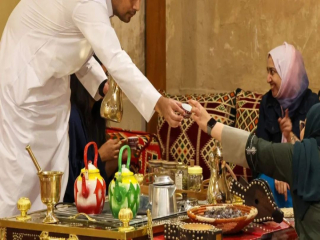
The Origin of Coffee in Arabian Peninsula Qatari traditional Coffee Flavor characteristics production method Taste method
Professional coffee knowledge exchange more coffee bean information please follow the coffee workshop (Wechat official account cafe_style) more boutique coffee beans please add private Wechat Qianjie coffee, WeChat: qjcoffeex in Qatar to watch the World Cup although can not drink, but after every game, fans can

Introduction to the taste characteristics of Indonesia Manning Coffee Manor with strong spice flavor
Manning coffee is produced in Sumatra, Indonesia, Asia, also known as Sumatran coffee. The main producing areas are Java, Sulawesi and Sumatra, 90% of which are Robusta species. Among them, the "Mantelin" produced in Sumatra is the most famous. The best of the exquisite traditional Arabica coffee produced in northern Sumatra of Sumatra is called Lindong Lintong and Mann.

Introduction to the grading Standard of Fine African beans and Indonesian Coffee Raw beans
Indonesia Manning coffee beans the most famous origin of Asian coffee is the islands of Malaysia: Sumatra, Java and Kaliman. Sumatra manning coffee from the Indonesian island of Sumatra is the most famous, it has two famous names, Sumatra mantenin DP first class and collection Sumatra mantenin. Sumatra Mantenin DP first-class finish

Taste difference between coffee red honey treatment and black honey treatment _ how much is a packet of coffee beans treated with honey
Professional coffee knowledge exchange more coffee bean information Please follow the coffee workshop (Wechat official account cafe_style) individual coffee has become increasingly popular in recent years, and more and more people will make their own coffee at home, while choosing and buying coffee beans, they always see confusing terms such as washing, sun exposure, honey treatment and other confusing terms on the packaging, these different treatment methods

What are the honey treatments for coffee beans? there are several ways to treat coffee with honey. How much is the coffee treated with honey?
Professional coffee knowledge exchange more coffee bean information please follow the coffee workshop (Wechat official account cafe_style) coffee will not get tired of drinking every day! In addition to different places of origin, different light treatment methods create a variety of flavors. The most commonly heard sun, washed coffee beans, honey-treated coffee beans, what is the difference between the treatment and the flavor? Whether you are a coffee addict or want to open your own coffee.

Introduction to the characteristics of High-quality Coffee beans in the Manor area
Most of the coffee in Rwanda is washed. The water washing method will first wash and flotation the ripe coffee fruit, then remove the exocarp, pulp and part of the pectin layer, then send the coffee into the fermentation tank, remove the remaining pectin layer and then send it to the drying ground for drying treatment, so that the water content reaches about 13%. The coffee in the picture above is placed in an African shed to dry.

Introduction to the characteristics of Rwanda boutique coffee beans with long-lasting aroma and taste of manor
Most of the coffee in Rwanda is washed. The water washing method will first wash and flotation the ripe coffee fruit, then remove the exocarp, pulp and part of the pectin layer, then send the coffee into the fermentation tank, remove the remaining pectin layer and then send it to the drying ground for drying treatment, so that the water content reaches about 13%. The coffee in the picture above is placed in an African shed to dry.